

I struggled with perfectionism for the most part of my life: I used to think, perfectionism helps me create amazing end results in my life, and that’s a good thing, right? It also brings me praise & recognition from people around me about the high quality products I create, and who doesn’t want to be praised?
Then, at some point, I found myself procrastinating, not engaging in valued activities and striving for my dreams because of perfectionism, expending huge amount of energy in producing perfect artefacts that actually have no value to me, having problems in my personal relationships due to a perfectionist attitude, and being paralyzed with indecision.
Doesn’t seem like perfectionism is helping that much anymore, does it?
If that sounds like you, keep reading to understand how perfectionism is actually detrimental for you and how to beat it. If that’s not you, well, you can keep reading as well to avoid falling into this trap.
Let’s first understand what perfectionism really is, where does it comes from, and then move on to how it’s actually destroying your potential and what to do about it.
What Is Perfectionism

Perfectionism can be defined by having perfect standards for whatever you engage in or expect from others.
This means, that you only feel that something is worth doing if it’s done perfectly.
Anything that falls short of that perfect standard is deemed a failure.
It’s black & white thinking: Success means you’ve done something perfectly, Failure means you have done something not perfect.
Where Does Perfectionism Come From?
1. Cultural Values

Our globalised culture implicitly deems perfectionism to be acceptable, and even encouraged. And everyone seems to be fine with that.
Our schools have notation systems, which indicate that you if you get a 20/20 or an A, it means you are perfect and you succeeded, and if you get anything below that, well it’s fine but you shouldn’t feel that happy about yourself, because there is always more you could have achieved.
The implicit premise here is that the goal is to get that perfect score, success means to get the perfect score, everything else is still not good enough to some degree.
Several other goals that have a target specific number on them are symptoms of perfectionism.
Loose weight by 10Kg: Anything less than that is considered a failure. Even if you made progress and are better than from when you started, it is still considered somewhat not good enough. It’s never good enough.
Because perfectionism is deeply rooted into our culture without us even being aware of it, there’s a higher chance we grow into being perfectionists.
2. Self Worth & Inferiority Complex

Another potential cause of perfectionism is low self worth & thinking that we are inferior to other people in some way (whether consciously or not).
If there is some trait in you that you don’t accept (probably because you’ve internalised other people reactions to it in your childhood), that you think makes you flawed and less of an equal to other people, then you might be inclined to compensate for this “flaw” by becoming a perfectionist in other areas in your life.
This is an attempt of your psyche to even out the lack of self worth you have, to bring up the balance by being perfect in other areas of your life and “better” than other people.
Something like this unconsciously runs in your mind:
“I feel inferior to you because of my real or perceived flaw, but look, I’m perfect in this and that and better than everyone else, so I deserve to be loved and accepted”
Whether you have a disability, you are overweight, you stutter, you have a real or perceived shortcoming, you most likely had an unpleasant experience in your childhood related to it, that led you to think you are less of a person, that your worth as a person is debatable, that you are not inherently worthy of love and acceptance just because you exist, that it’s conditional.
And all of this has led to compensations strategies, including becoming a perfectionist.
3. Fear of Failure

Perfectionists are more sensitive to failure than other people: Failure to us feels like a threat to our self esteem, a confirmation to our cognitive bias that we are not good enough as we are (because of our lack of self worth above), and we tremble at the idea of failing at something.
Consequence? We avoid failure by becoming perfectionists: We only attempt something if are 100% assured it will work flawlessly, otherwise we don’t even engage in it.
3 Ways Perfectionism is Killing your Potential
1. Self Sabotage

You are about to start a race: You let your opponent get a 5 second head start and you start running: If you win, you are amazing, if you lose, it would be because your opponent started before you and it’s not really a failure on you.
There is no outcome where you lose because of you, because of your lack of physical ability, you don’t allow that to happen because you fear failure like the plague. So you engineer a situation where that outcome can never exist, and the consequence of that is sabotaging yourself and preventing yourself from seeing what your actual potential is.
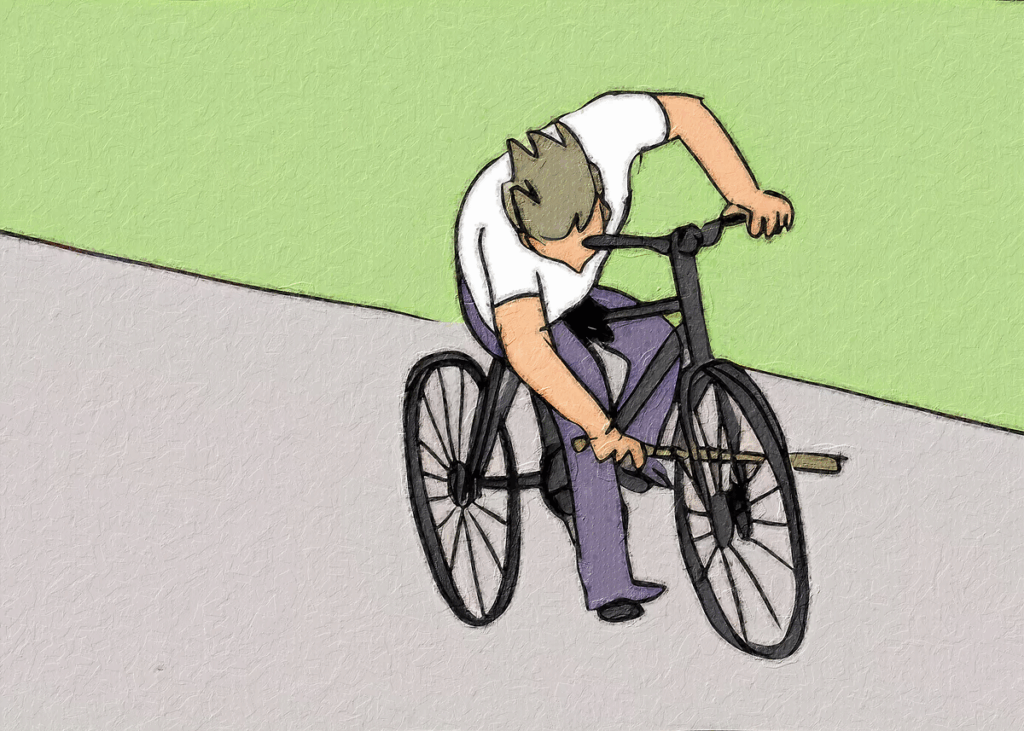
That’s called self sabotage.
Self sabotage is preventing you from ever seeing your actual potential and fully realising it, and getting the necessary feedback to improve.
If you don’t let your opponent start first, you might see that you are actually very fast and you’ll win the race, hence realising your full potential.
Or, you might actually lose, and notice where you lack in terms of sprinting and what you can improve later on, getting the required feedback to fully realise your running potential.
But you don’t do that, because you are terrorised of failure, and you waste your life without fully realising your strengths, just because of a fear, a fear of failure.
2. Procrastination

Perfectionism leads to not doing things, simple.
Since your benchmark and expectation for doing things is doing them perfectly, you would keep on looking for the perfect environment, the perfect timing, and the perfect circumstances before engaging in that activity.
For instance, you only work on your side project when you are at home at your tidy desk between your most productive hours 4 to 6pm. You don’t engage in this in any other place at any other time even if you have free time.
These mental rules are the barriers of your self made prison: You prevent yourself from making progress in your goals and realising your potential, just because you are looking for perfect.
You end up endlessly postponing it and not doing anything out of your life: That’s chronic procrastination, and that’s what perfectionism does to you.
3. Indecision

Perfectionism leads you to believe that there is always a perfect choice that you can take when offered a multitude of choices. Consequently, you are easily able to spend hours, days, weeks, or even months, thinking about the best decision to take.
You waste so much time in this deliberating mode that most often that not, time makes the decision for you. Your pool of potential choices shrinks as time passes while you are deliberating, and you end up with one or no choices at all to make.
That’s because in your deliberating phase, you forgot a crucial parameter in your decision making process: Time.
You need to have a deadline for making a decision, otherwise it will be made for you.
Also, do you really believe there is a perfect decision every time to make? How can you ever know that? Do you know what that decision will lead to in 5, 10, 20 years down the line? Probably not, therefore, there is never a perfect decision that you can make at any moment, because you can never know for sure what the full consequences of that decision will be, however much thinking and planning you do.
The only thing you can do is to make a good enough decision aligned with your values that allows you to move forward in your life, that’s it.
The alternative being chronic indecision and not moving forward in life.
Alright, do you now see how perfectionism is hindering your potential in life? Are you convinced that it’s bad for you?
Are you ready to overcome it?
Read on if you do.
3 Powerful Ways to Beat Perfectionism
1. Progress over Perfection

Your definition of success for doing something needs to change from having a perfect outcome to making progress.
To put it simply, as a perfectionist, your expectation and the goal you have in mind for doing anything is to have a perfect result. To you that’s success, and failure is any other result less than perfection. We’ve seen to where this leads earlier.
So drop that, and incorporate this new mindset: Your expectation from whatever you do is progress, not perfection. Progress Over Perfection.
If you make progress on something, however much tiny it is, you won! If you read just one page from your book, you won, if you do just a 10min walk, you won! Success is making progress, any amount of progress, Failure is not doing anything.
2. Self Love & Self Acceptance

To cure your perfectionism, you need to address one of the potential root causes: Do you accept yourself as you are, with all your flaws and imperfections?
If the answer is no, then you’d probably need to work on that.
How? Talk to yourself, journal, take care of your body and health, go to a therapist, do the things that are important to you, look straight at what you don’t like in yourself, don’t be afraid, sit with it, let it exist, don’t deny it, welcome it, and own it.
It’s part of you, it’s probably not going to go anywhere, and if you are not going to own it, nobody is going to own for you.
If it’s disowned, there will always a part of you that is bothering you, that you avoid, leading you to avoid certain situations, behaviours, actions, places, opportunities, people, risks, and a larger part of life.
And there always be a tendency to compensate for that, to want to make people like you more, love you more, by being the nice guy or girl, being the perfectionist who does everything neat and perfect.
But that’s not a solution:
Whatever you do as a perfectionist and appreciation you receive will never be enough to cover for what is actually not accepted in you, what is disowned by you and what is not loved by you. It’s never enough because you haven’t got the love and acceptance for what really needs love and acceptance, the parts of you that were abandoned & rejected.
That’s why the only real solution here is to love and accept everything in you. Even if nobody else does. There is no other way.
Look at your flaws and everything that makes you you, and accept it, love it, own it, it’s part of you, and stand by your side, no matter what: That’s how your increase your self-worth and become whole.
And that’s how, you will have eliminated one of the sources of perfectionism.

3. Reframe Failure
To move past perfectionism, we need to move past our fear of failure.
Otherwise, you will be letting a distorted fear control your entire life, which is not a great way to spend your precious time on this planet before death takes us all.
Yes, in this case, Fear of failure is a distorted fear, meaning that it is based on a cognitive biases and and faulty thinking which is:
- Failure means I’m a failure.
- Failure means I’m worthless.
- Failure means I can never succeed in this endeavour.
- I’m not supposed to fail (Because you have perfect standards for results as a perfectionist, remember?)
Let’s challenge these thoughts:

How can failing at a given task x lead to the idea that you are a total failure? Isn’t that pure generalisation? Can you even say that an entire person is a total failure or not? You can fail on a few things, and succeed on a lot of others, and maybe later on succeed on the things you’ve previously failed on. The existence of other success instances means that the label “I’m a failure” is Wrong and doesn’t any make sense.
What does Failure has to do with your self-worth? Do you have more value as a human being if you have less failures and more successes? Are you your failures and successes? Is that your identity and what defines you as a person?
The answer to all these questions is No.
- To start with, a lot of what you engage in is to a high degree outside of your control, so if you fail at it, you can’t take that personally, as it almost always involves other external factors that contributed to this failure.
Now, even if it’s the task you failed at was fully within your control, that doesn’t lessen your worth as a human being. You have inherent self-worth simply because you breathe, you exist, you have life inside of you, animating your body, and you have inherent value as a person because your life has value. You don’t need to succeed, or do anything to gain that worth, you already have it. Therefore, it’s okay to fail at anything, it doesn’t define you or define your value as a human being.
- Second, failing at something doesn’t mean you cannot succeed at it. Far from it. It depends on several things: the circumstances, external factors influencing the result, and your skill level. Assume you’ve got the right skill level, you might still fail the first time due to external factors, the second time, and the third time. Then you try again the 4th time and it works.
Why? Most of the time it doesn’t depend on you and it depends more the changing circumstances. So you just have to keep trying, keep showing up, until it clicks.
Let go of the heavy weight & meaning you give to failure as a perfectionist: A judgment on your entire being, and an indicator that you can’t make it.
Because Failure is not the end of you, it’s just the beginning of a wiser, more experienced, and more resilient you.


Perfectionism is not your ally, it’s your silent enemy, one of your biggest obstacles in living and achieving your full potential in this life.
It makes you procrastinate over all of your goals, indecisive about what to do even on the smallest things, self sabotage yourself to keep the illusion of safety from failure, and stuck in life in general.
Simply put, perfectionism is holding you back from the life you could be living: A life of growth, freedom, and self-actualisation.
So let go of perfectionism, and embrace progress over perfection. Embrace taking one step forward instead of waiting for the perfect moment, for the perfect place, for the perfect plan, embrace failure as a feedback mechanism instead of being scared the hell out of it, and embrace every flaw in you to become more whole instead of disowning yourself.
That’s how you beat perfectionism, and that’s how you live your best life.

Stay in the loop